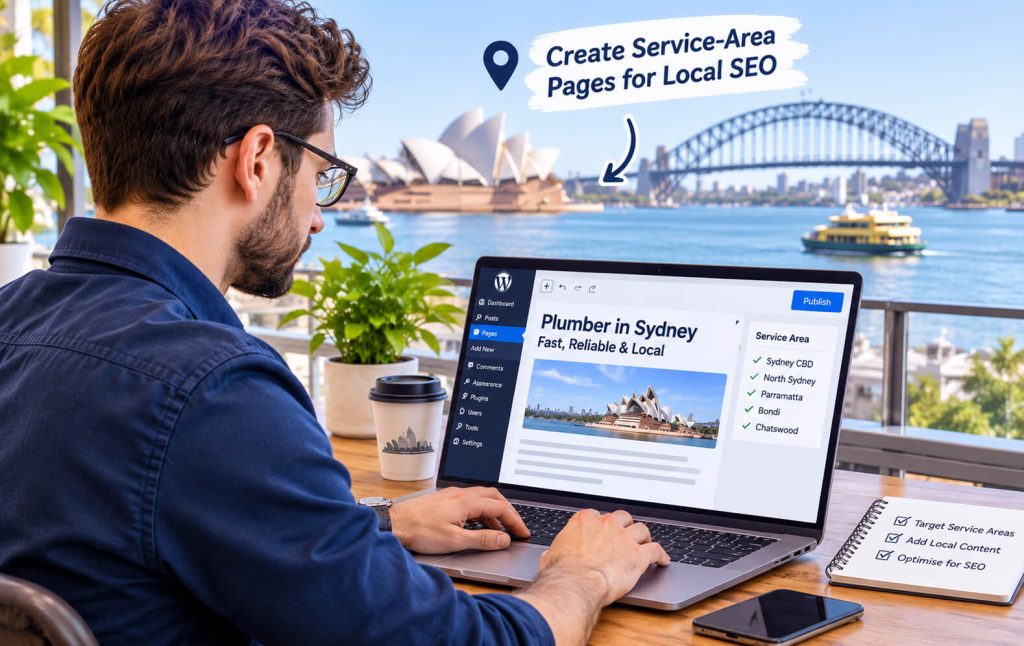
On-page SEO for Sydney small businesses means making the titles, headings, body content and contact details on your website clear enough that both customers and search systems understand what you offer and where you operate. A well-structured page answers common local questions directly, uses natural language customers search with, and keeps name, address and phone details consistent with your Google Business Profile.
Why on-page elements matter for local visibility
Google’s guidance emphasises creating helpful, people-first content and placing relevant words in prominent locations such as the title and main heading. For Sydney operators this supports relevance for searches that combine a service with a suburb or “near me” intent. On-page work does not replace a complete Google Business Profile or consistent directory listings, but it strengthens the signals those profiles point to. Australian English spelling and local terminology also help pages feel relevant to local readers.
Write clear, unique title tags
Each page should have a unique HTML title that describes the specific content. Google uses title elements for the majority of search result titles. Include the primary service and location naturally where it fits—for example, “Emergency Plumber Inner West Sydney | [Business Name]”. Keep titles concise so they remain readable. Avoid identical titles across pages or generic labels such as “Home”.
Practical title checks
- One unique title per page.
- Primary topic near the start.
- Business name at the end if space allows.
- No keyword lists or suburb stuffing.

Use descriptive meta descriptions
A meta description is a short summary that can appear in search snippets. Google states that unique descriptions help users understand what a page offers. Write one for each important page that summarises the service, the Sydney areas covered, and the next step (call, form or visit). Aim for roughly 140–160 characters so the full text is more likely to display. Descriptions do not directly control rankings, but clearer snippets can improve click-through when people compare local options.
Structure content with logical headings
Use one H1 that matches the page’s main topic. Follow with H2 and H3 headings that break the content into scannable sections. Headings should describe what follows rather than repeat keywords. For a service page this might include “What the service includes”, “Areas we cover in Sydney”, and “How to request a quote”. Clear hierarchy helps both readers and systems extract the main points.
Place consistent NAP details on the site
Name, address and phone number (NAP) should match the verified Google Business Profile exactly, including spelling and formatting. Display them on the contact page, in the footer, and on relevant service pages. For service-area businesses that visit customers, describe the coverage area clearly instead of listing a non-public address. Consistent details reduce mixed signals when search systems compare your website with directory listings.
![Small business storefront in Sydney showing consistent name and phone details]](https://theumbrella.com.pk/wp-content/uploads/2026/11/Sydney-street-scene-with-small-business-storefron.jpg)
Build useful service and area pages
Create one focused page for each core service rather than a single long list. Describe what the service covers, typical questions customers ask, and the suburbs or regions you serve. Link related pages together with descriptive anchor text. Suburb-specific pages are useful only when you can add genuine local detail (completed work, local references or unique considerations); near-duplicate pages that only swap place names add little value.
Supporting technical and usability points
Ensure the site is mobile-friendly and uses HTTPS, as these are baseline expectations. Make phone numbers clickable on mobile. Use descriptive alt text on images that show real work or premises. Internal links should help visitors move between related services and the contact page. These elements support the on-page content rather than replace it.
Simple on-page checklist for Sydney operators
- Confirm every important page has a unique, descriptive title and H1.
- Write a unique meta description that mentions the service and Sydney relevance.
- Break content into clear H2/H3 sections that answer real questions.
- Display matching NAP (or clear service-area description) on contact and key pages.
- Link service pages to each other and to the contact page with natural anchors.
- Review mobile display and click-to-call functionality.
- Align all on-page details with the Google Business Profile before updating directories.

Next steps
Start with your highest-traffic or highest-value service pages. Update titles, headings and NAP first, then expand content to answer common customer questions. Pair these changes with a complete Google Business Profile and a short set of matching directory listings. Owners who want coordinated support can review SEO services or the related guides on digital marketing strategy and website design priorities.
Frequently Asked Questions
Do title tags still matter for local SEO in Sydney?
Yes. Google primarily uses the HTML title element for search result titles. A unique, descriptive title that includes the service and location helps both relevance and click-through.
Should every suburb have its own page?
Only if you can add genuine local detail. Near-identical pages that differ only by suburb name rarely help and can dilute focus. A strong service page plus clear area coverage is usually more effective for most small operators.
How does on-page SEO relate to my Google Business Profile?
The profile drives many local map results. The website supports it by confirming the same services, areas and contact details. Consistent NAP across both reduces conflicting signals.
What is a realistic first step for a small business?
Update the title, H1 and contact details on your top two service pages, then check they match the Google Business Profile. This is usually faster than rewriting the entire site.